
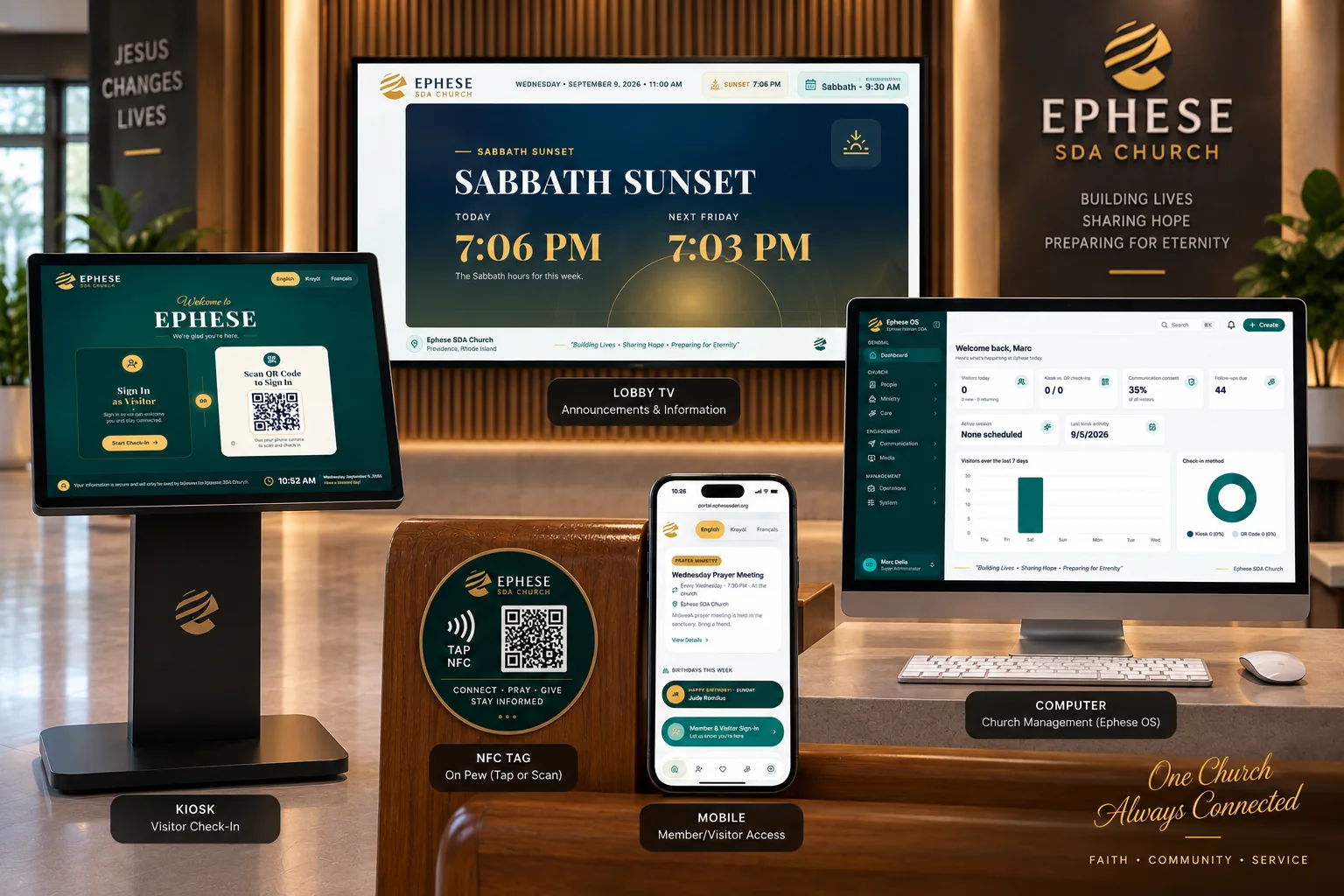
Ephese OS is a church management and digital experience platform built to give a congregation one place to run its day-to-day life. It brings member records, ministries, events and communication into a single system so leaders spend less time on administration and more time with people.
- IndustryChurches & ministries
- ServicesUX/UI & digital product design, data model & build, brand identity
- Type of workProduct design and development of a web application
The challenge
Church life generates a lot of administration: who belongs to which household, who serves on which team, what is happening next month, and how to reach the right people about it. That information usually lives in several disconnected places, a spreadsheet here, a group chat there, a giving platform that knows names but not ministries. Leaders end up as the integration layer, copying details between tools, and the people they want to reach hear about things late or not at all.
Discovery
We started by mapping how a congregation actually runs a week: who records a new member, how a ministry team is organized, how an event goes from an idea to a room full of people, and how a message reaches a specific group. That mapping showed where the same information was being entered more than once and which steps depended on one person remembering to do them.
Strategy
Rather than a set of separate modules, Ephese OS was planned around a single data model. A person belongs to a household, serves in ministries, registers for events and receives communication, and each of those is a relationship on the same record rather than a separate list. Everything else in the product follows from that decision.
What we built
- Member management and household records
- Ministry and team organization
- Event scheduling and registration
- Communication tools for leaders and members
- A design system and brand identity for the platform
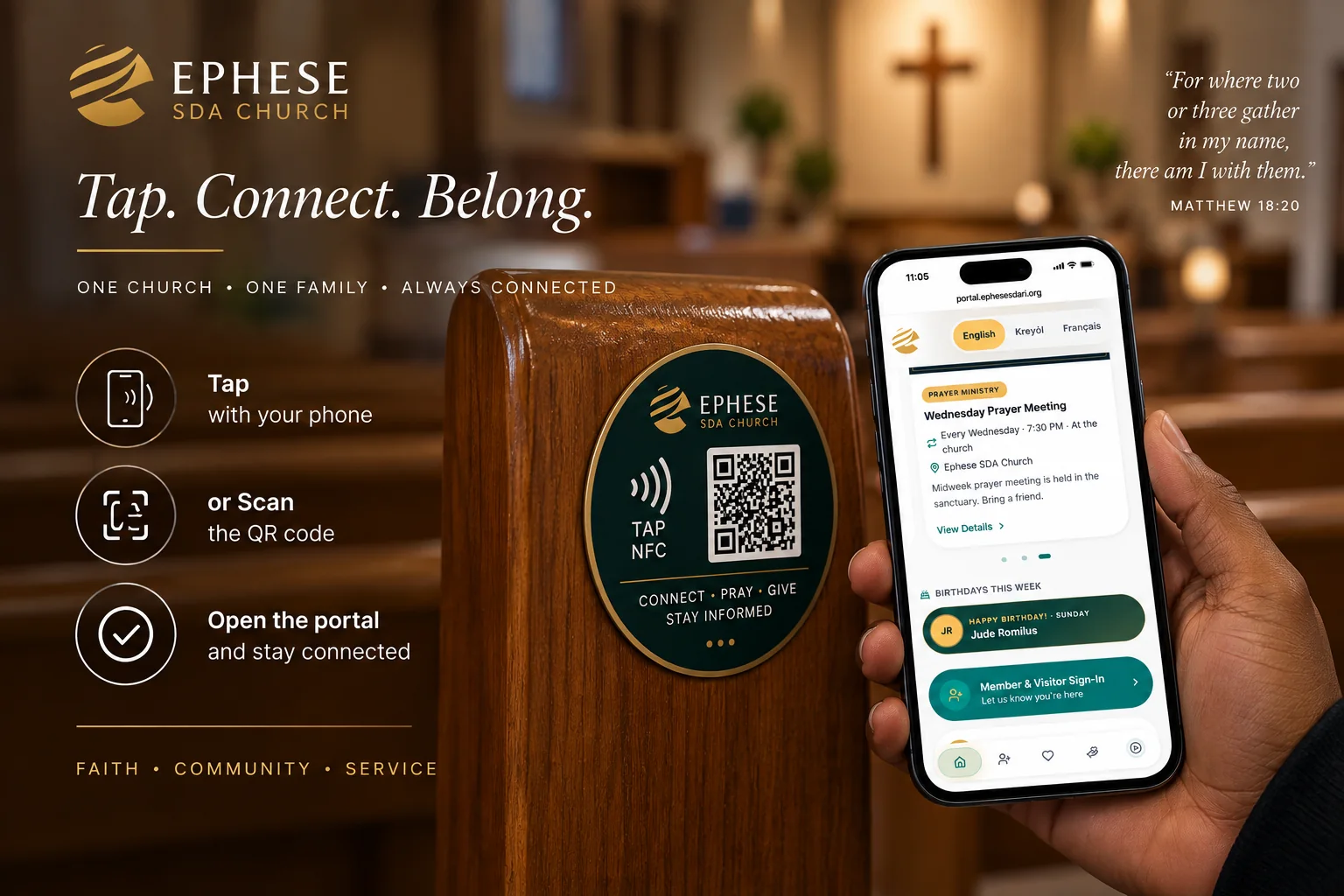
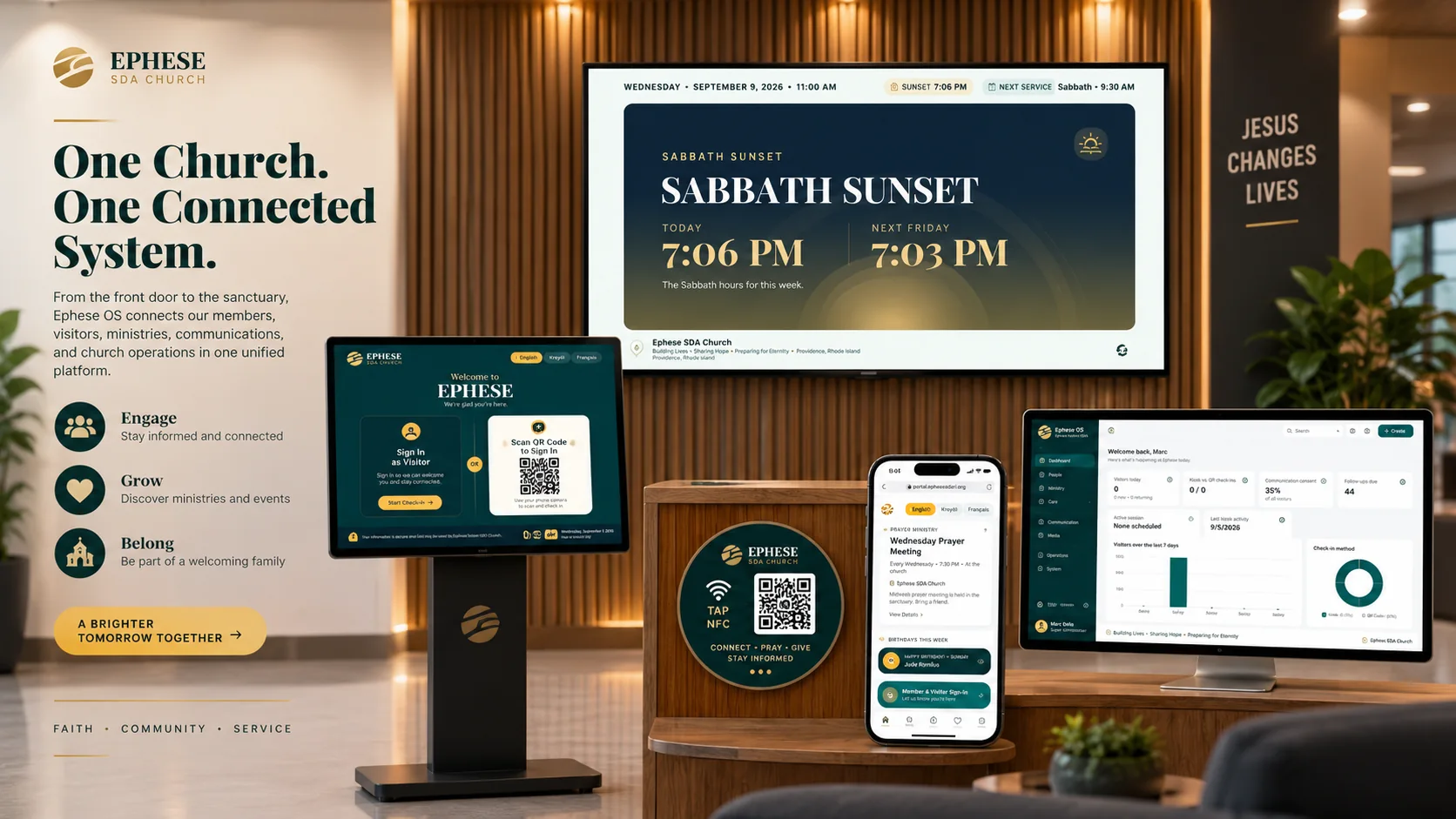
- Front-of-house surfaces that read from the same records: a visitor check-in kiosk, a lobby display and NFC/QR pew tags that open a phone portal
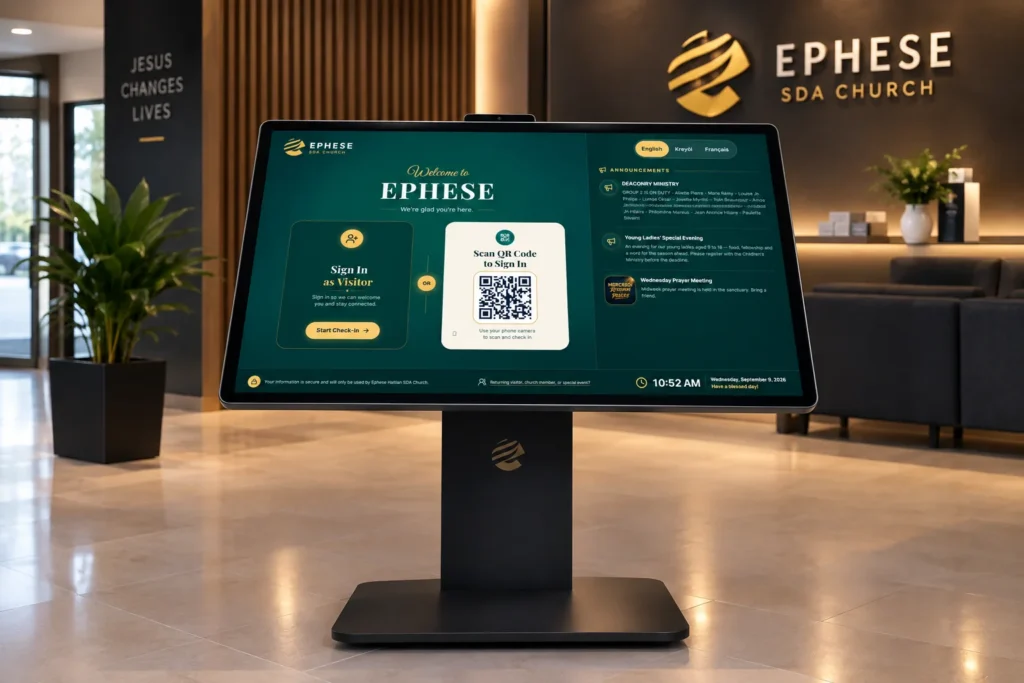
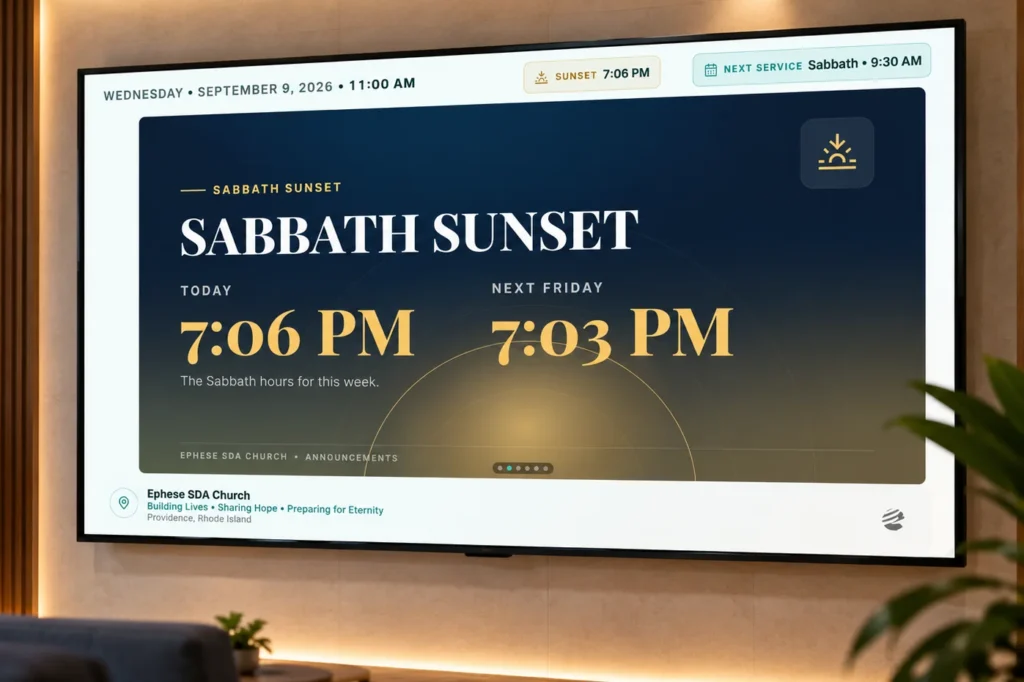
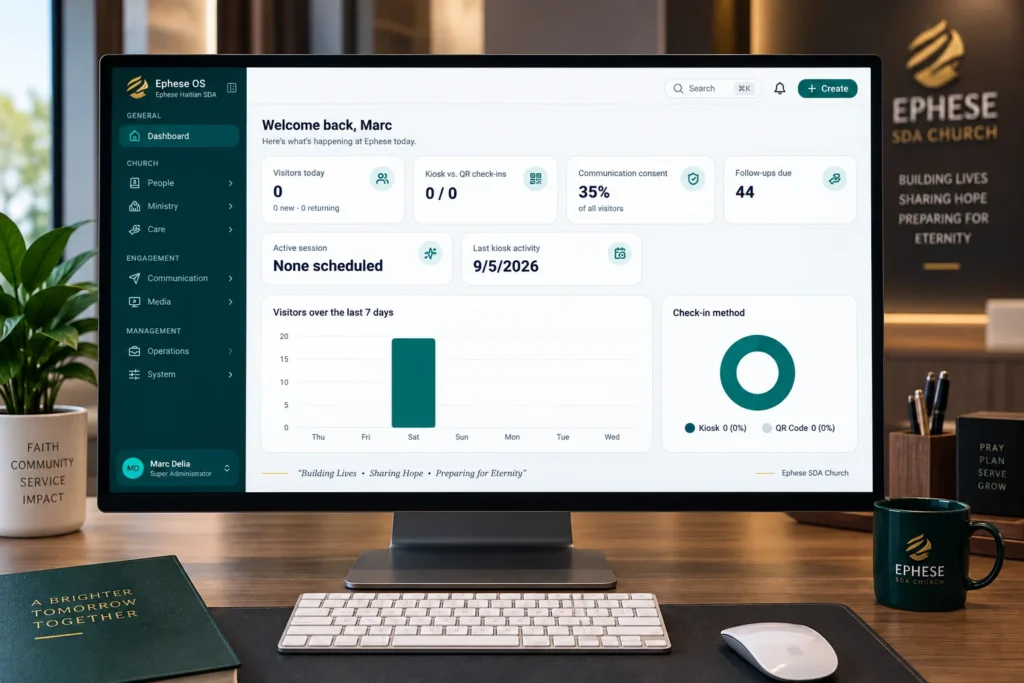
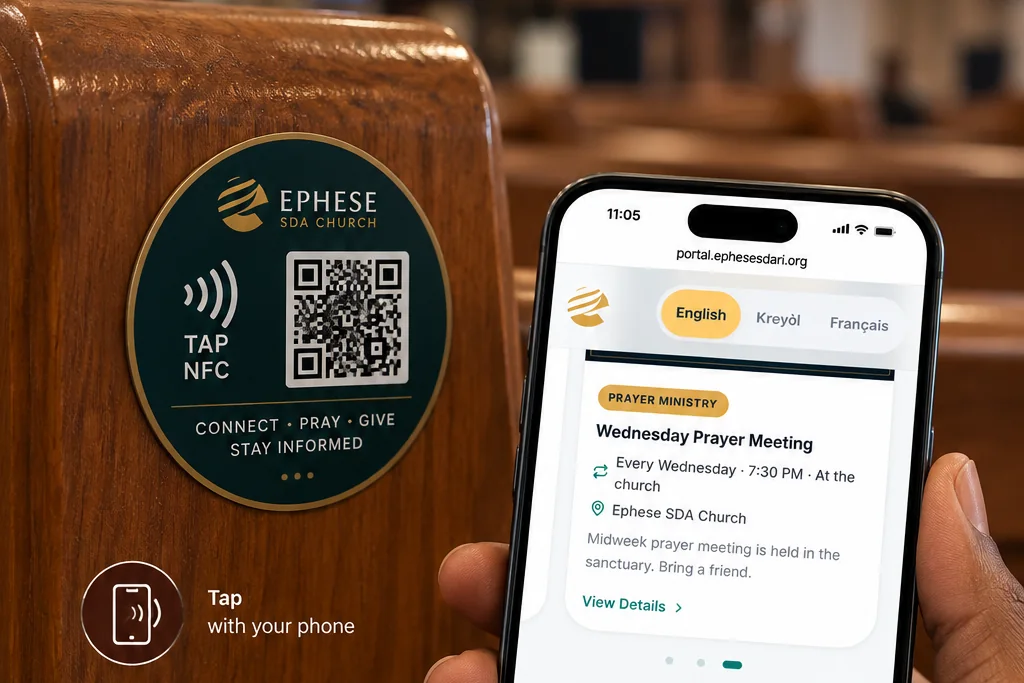
Product visuals built from the Ephese OS interfaces. Names and figures shown are sample data.
Design decisions
The interface was designed for volunteers and staff who use it between other responsibilities, often on a phone. Screens are organized around the task in hand rather than the database behind it, common actions are one tap away, and the component system keeps every screen consistent so a new feature never needs new training. The brand identity and design system were created alongside the product so the platform looks like one considered thing rather than a collection of forms.
Development
Deehvine Marketing handled the product design and build end to end: information architecture, interface design, the underlying data model, and the brand work that ties the platform together.
Outcome
Ephese OS gives a congregation one system of record for its people, ministries, events and communication, replacing the spreadsheets and disconnected tools that used to hold that information. Leaders spend less of their week on administration and more of it with people.
Building something similar for your church or ministry? Read about our church website design and ministry tools, or start a project.